Ingredients

What Does “Emulsify” Mean in Skincare?

What Does “Emulsify” Mean in Skincare?

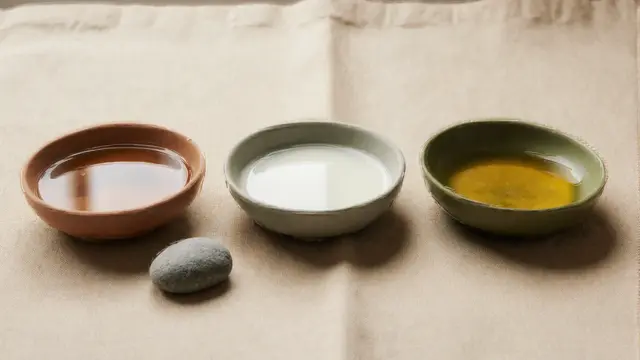
To emulsify, in skincare, means to combine oil and water into one stable, uniform mixture using an emulsifier — an ingredient built to bond to both liquids at once, so they don’t separate the way oil and water naturally do when left alone. It isn’t a fancier word for “mix.” Stir oil and water together with nothing else involved, and they pull apart again within seconds. A genuine emulsion holds — and that holding is the entire mechanism behind a cleansing oil turning milky in your hands, or a jar of face cream staying one smooth, uniform texture instead of separating into an oily layer sitting on top of a watery one.

What “Emulsify” Actually Means, in Plain Terms

Chemically, “emulsify” describes forcing two liquids that don’t naturally mix — most often an oil and water — into a stable dispersion, where tiny droplets of one liquid are suspended evenly throughout the other. The word comes from the Latin emulgere, “to milk out,” which is a strangely literal description of what an emulsion actually looks like: a genuinely mixed oil-and-water combination usually turns milky-white, the same way milk itself is an emulsion of fat droplets suspended in water.

In skincare, “emulsify” shows up in two related but distinct contexts. The first is a formulation term: most creams, lotions, and moisturisers are emulsions, built by a chemist who combined an oil phase and a water phase using an emulsifier so the finished product stays one stable texture in the jar. The second is a use-at-home term: certain cleansing oils are designed to emulsify on your skin, in real time, the moment you add water — the specific moment most people are actually asking about when they search for how to emulsify oil and water for skin.

Why Oil and Water Don’t Mix on Their Own

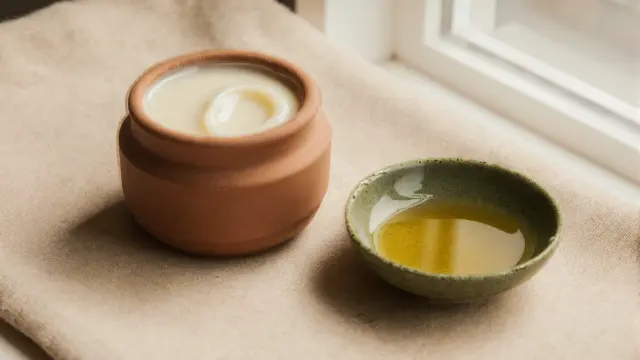
Water molecules are polar — they carry a slight electrical imbalance that makes them attract each other strongly. Oil molecules are non-polar — they have no such imbalance, so they’re indifferent to water and cluster with other oil molecules instead. Left alone, water molecules bond tightly to each other and effectively squeeze oil out, which is why a splash of oil in a glass of water floats as a separate layer rather than blending in, no matter how long you leave it. This isn’t a flaw in either liquid — it’s simply what “oil” and “water” mean as categories, and it’s why getting the two to combine and stay combined needs a third ingredient built for the job, rather than just stirring harder or longer.

What an Emulsifier Actually Does

An emulsifier is a molecule with a split personality: one end is attracted to water, the other to oil. Chemists call this “amphiphilic” — literally, “loving both.” Once an emulsifier is present, it sits at the boundary between the oil and the water, water-loving end facing out, oil-loving end buried in the oil. Enough molecules doing this at once breaks the oil into tiny, evenly distributed droplets and keeps them suspended in the water, rather than clumping back together and separating out the way oil does when nothing is holding it in place.

A Real Example, From an Actual Ingredient List

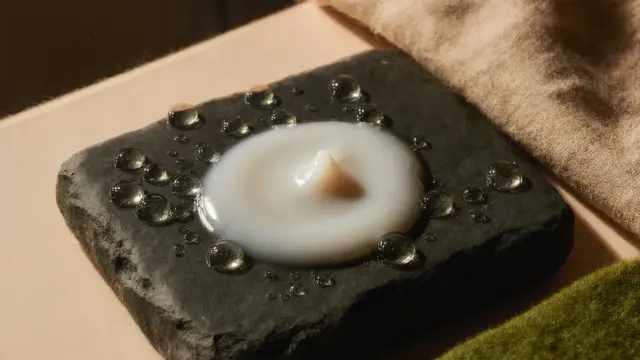
This isn’t an abstract description — it’s exactly what’s printed on a real cleansing-oil ingredient list. Our own Oil-to-Milk Cleanser uses sugar-derived emulsifiers — specifically sucrose laurate and sucrose palmitate — sitting in the oil phase, doing nothing until water arrives. The moment it does, with enough massage to distribute it evenly, those molecules grab onto both liquids at once and pull the whole mixture into the milky texture the format is named for. That’s emulsification happening in your hands, in real time, rather than in a lab beaker.

Two Kinds of Emulsion: Oil-in-Water and Water-in-Oil

Not every emulsion is built the same way, and the difference explains a lot about how different skincare textures actually feel on skin.

  • Oil-in-water emulsions are mostly water, with small droplets of oil dispersed through it — lighter, faster-absorbing, easier to rinse off. Most lightweight lotions, many daytime moisturisers, and the milky rinse-off phase of an emulsifying cleanser fall into this category.
  • Water-in-oil emulsions flip the ratio: oil is the majority phase, with water droplets suspended inside it — richer, more occlusive, and more resistant to rinsing off with water alone. Heavier balms and some overnight creams lean this way.

Neither type is inherently “better.” They’re suited to different jobs, which is why a lightweight day lotion and a heavy night balm can both legitimately call themselves emulsions while feeling like completely different products.

Where Emulsification Actually Shows Up in a Skincare Routine

Once you know what to look for, emulsions turn out to be one of the most common things in any bathroom cabinet, not a niche or unusual formulation choice:

  • Moisturisers, lotions, and most creams. The vast majority of leave-on skincare that combines an oily, hydrating component with a lighter, watery one is an emulsion of one type or another.
  • Emulsifying cleansing oils. A cleansing oil built to turn milky on contact with water — the oil-to-milk format — relies on exactly the mechanism described above, applied to a rinse-off product rather than a leave-on one. We’ve written the full comparison of how this format sits alongside plain cleansing oils and cleansing milks separately in oil cleanser, milk cleanser, or both?
  • Some sunscreens. Many modern sunscreen formulas are emulsions built to spread UV filters evenly across skin without feeling greasy or chalky.

“Emulsify” vs. the Words People Confuse It With

Emulsifying vs. Mixing or Blending

“Mixing” and “blending” describe the action of combining things — they say nothing about whether the result stays combined. You can mix oil and water by shaking them together, and for a few seconds you’ll get something that looks blended. Without an emulsifier, that state is temporary: the droplets recombine and separate back out, usually within minutes. Emulsifying means the combination is stabilised — held together by an ingredient built for that one job — rather than just briefly agitated into looking mixed.

Emulsifying vs. Dissolving

These get confused because both show up in cleansing conversations, but they’re different mechanisms doing different jobs. Dissolving is what a plain cleansing oil does to makeup, SPF, and sebum before any water is involved — oil dissolving oil is a real, separate chemistry fact, not a figure of speech, and it’s the mechanism a first cleanse in a double-cleanse routine relies on. Emulsifying happens afterward, once water is introduced, turning the oil-and-impurity mixture into something that rinses cleanly away instead of leaving a film. One formula can rely on both mechanisms in sequence, which is exactly what an oil-to-milk cleanser does — the same sequence we walk through step by step in can you double-cleanse with an oil-to-milk cleanser?

Emulsifying vs. Micellar Cleansing

This is the mix-up worth being most precise about, because the two mechanisms look similar on paper — both involve a molecule with an oil-loving end and a water-loving end — but they work differently. An emulsifier’s job is to hold an entire mixture of oil and water together as one stable texture. A micelle, the active ingredient behind micellar water, is a tiny cleansing sphere that individually surrounds and lifts particles of makeup or sebum off skin and holds them suspended in the water on a cotton pad — it isn’t turning a whole product from one texture into another the way an emulsifier does. If you’ve wondered where micellar water fits against an oil-to-milk cleanser, we’ve covered that separately in what is micellar water, and do you rinse it off?

Why Emulsification Matters for How a Product Actually Performs

Getting the emulsion right (or wrong) shows up directly in how a product looks, feels, and lasts:

  • Stability over time. A well-formulated emulsion stays one uniform texture on the shelf for its whole shelf life. A poorly stabilised one can “break” — visibly separating into an oily layer and a watery one, a genuine formulation failure rather than something you did wrong by using it.
  • Texture and rinse-off feel. Whether a product feels rich and occlusive or light and fast-absorbing comes down largely to whether it’s an oil-in-water or water-in-oil emulsion, and how much of each phase it contains.
  • What the formula needs to stay safe. The moment water becomes part of a formula, it becomes a place microbes can potentially grow, so an emulsified product needs a proper preservative system, dosed correctly for that specific formula, to stay safe over its whole shelf life — a requirement a plain, water-free oil doesn’t carry.

How to Tell Something Has Actually Emulsified

The visual test is simple and consistent, whether you’re looking at a jar of moisturiser or a cleansing oil mid-rinse: a properly emulsified mixture looks uniformly milky or creamy, with no separate oily streaks and no watery layer visibly sitting apart from the rest. If you can see distinct oil and water sitting next to each other rather than one blended texture, the emulsification hasn’t fully happened yet.

If you’re specifically working with an oil-to-milk cleanser and it isn’t turning milky the way it’s supposed to, that’s a technique question rather than a definitional one — we’ve written the complete troubleshooting walkthrough, step by step, in how to properly emulsify a cleansing oil.

Quick Answers

What does “emulsify” mean in skin care?

It means combining oil and water into one stable mixture using an emulsifier — an ingredient built to bond to both liquids at once so they don’t separate. In a cleansing oil, that’s the moment the formula shifts from an oily texture to a milky one as water is added.

What is an “emulsifying oil” for skin?

It’s an oil-based product formulated with an emulsifier already in it, so it changes texture and becomes water-miscible when you add water during cleansing — rather than a plain oil, which stays oily and needs a second, separate step to fully rinse away.

How do you emulsify oil and water for skin, in general terms?

You need an actual emulsifier present — not just oil and water on their own — plus enough massage to distribute it evenly through the mixture. For the full step-by-step technique for a cleansing oil, see how to properly emulsify a cleansing oil.

Is emulsifying the same as just mixing oil and water together?

No. Mixing without an emulsifier is temporary — the liquids separate again within minutes. Emulsifying specifically means the mixture is stabilised by an ingredient built for that job, so it holds instead of splitting back apart.

Once you know what the word is actually describing, a lot of skincare language stops sounding like marketing shorthand and starts sounding like what it is: a real, specific chemical process with a name. To see that mechanism applied to an actual product comparison rather than the general concept, oil cleanser, milk cleanser, or both? is the practical next read — and if you’re also wondering whether a cleanse deserves a slot in your morning as well as your evening, that’s answered separately in do you need to cleanse in the morning?