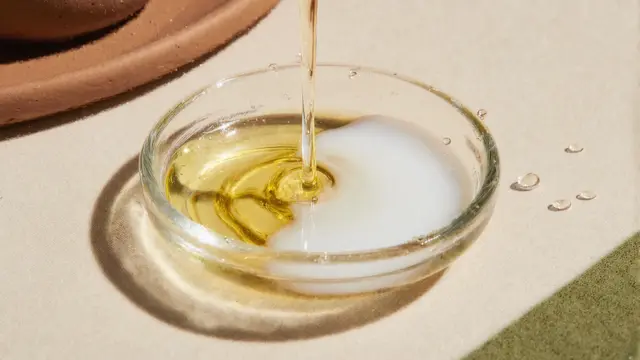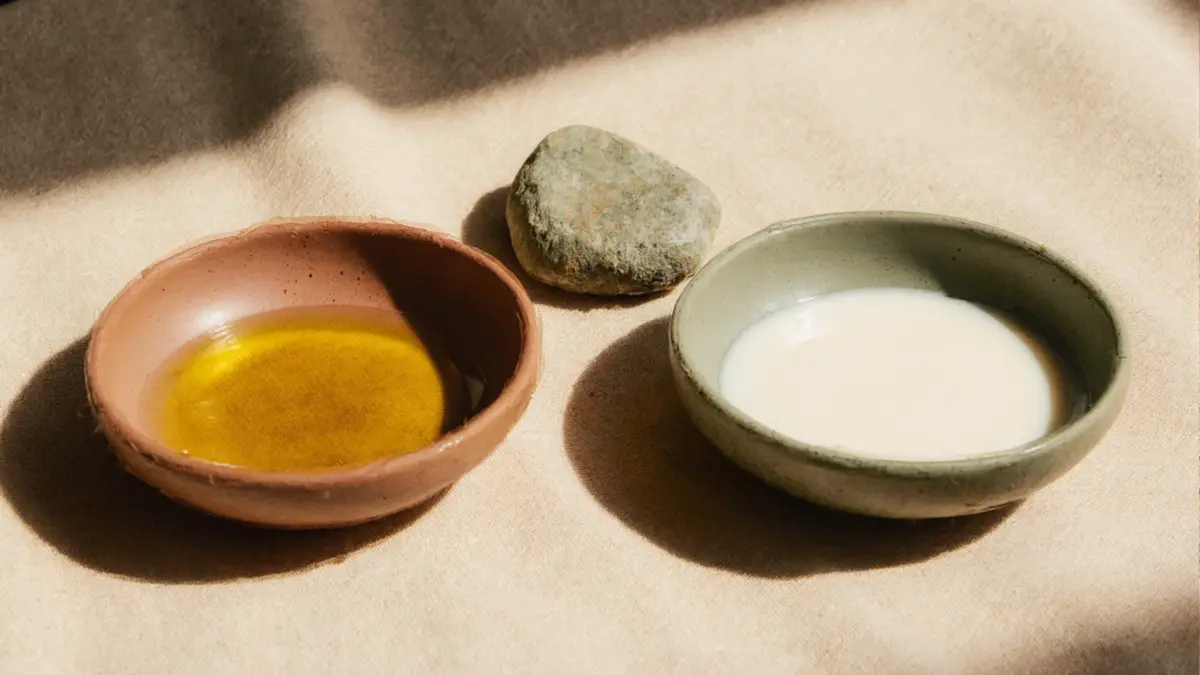
One cleanser is usually enough. Cleansing milk feels creamy as you apply it. Cleansing oil typically goes on dry skin, and an oil-to-milk formula turns milky when you add water. Choose based on what you want to remove, how the cleanser rinses and how your skin feels after using it.
Cleansing milk vs cleansing oil at a glance
| Format | What to expect |
|---|---|
| Cleansing oil | An oil-based texture. Check whether it emulsifies with water or needs another removal method. Makeup and sunscreen removal depend on the product. |
| Cleansing milk | A milky emulsion, removed by rinsing or wiping according to the label. It can be a single cleanse; it is not automatically less capable of removing makeup. |
| Oil-to-milk | An oil texture that becomes milky with water. It is one product in one cleansing step, not double cleansing. |
A cleansing oil is different from a plain facial oil. Do not assume a facial oil will rinse off in the same way. For any format, check the directions and the removal claims relevant to your makeup or sunscreen.
What makes oil-to-milk change texture?
Emulsifiers help oil and water mix during use. Our Oil-to-Milk Cleanser contains sucrose laurate and sucrose palmitate. The change to a milky texture makes it a different application experience from a ready-made cleansing milk; it does not establish superiority over other cleansers.
Oil-to-Milk Cleanser, 150ml, €29.90. A certified natural formula for sensitive skin. Goes on as an oil, rinses as a milk: the exact format this article is about. Shop the cleanser →
Sensitive skin and oily skin
Low foam and a milky texture do not guarantee gentleness. Oil-to-milk formulas also use ingredients that help oil and water mix; they do not bypass surfactants as a category.
Our Oil-to-Milk Cleanser effectively removes makeup and leaves skin feeling soft and comfortable. It contains camomile, sea buckthorn and cloudberry extracts, is suitable for sensitive skin and is dermatologically tested. It also contains Parfum and Alcohol. Suitability wording does not guarantee every individual’s response; check the full ingredient list against sensitivities you already know about.
Oily skin does not automatically require or exclude an oil cleanser. Choose by how the specific formula works for you. We also cover cleansing milk on oily skin and cleansing oil and clogged pores. Cleansing-format advice is not a treatment recommendation.
How to use our oil-to-milk cleanser
Apply to dry or damp skin, massage gently and rinse thoroughly. Avoid the eyes.
Do you need both oil and milk?
If one suitable cleanser removes what you need to remove and feels comfortable, you can stop there. If residue remains, review the directions and whether the remover is intended for the makeup or sunscreen you wear. A second cleanse can be useful for some routines, but it is not compulsory.
Our guide to double cleansing with oil-to-milk explores that decision. For a cotton-pad option, see how micellar water works and the three-format comparison.
Cleansing is the first step of our ritual; the barrier-serum guide explains the next product rather than adding another cleansing step.
Quick questions
Can cleansing milk remove makeup?
It can, when the formula is intended for it. Check the label for the makeup you wear, especially waterproof products, and use the stated removal method.
Is oil-to-milk double cleansing?
No. Oil-to-milk is one product that changes texture with water. Double cleansing uses two cleansing steps, often with different products.
Which is gentler for sensitive skin?
The format alone cannot decide that. Check the full formula, known sensitivities and your experience of the product. A milky texture or low foam is not a guarantee.
Can I use both?
Yes, if a second cleanse serves a purpose in your routine. If one suitable product removes what you need and feels comfortable, you do not have to add another.
For general technique, the American Academy of Dermatology advises gentle, non-abrasive cleansing and avoiding scrubbing.