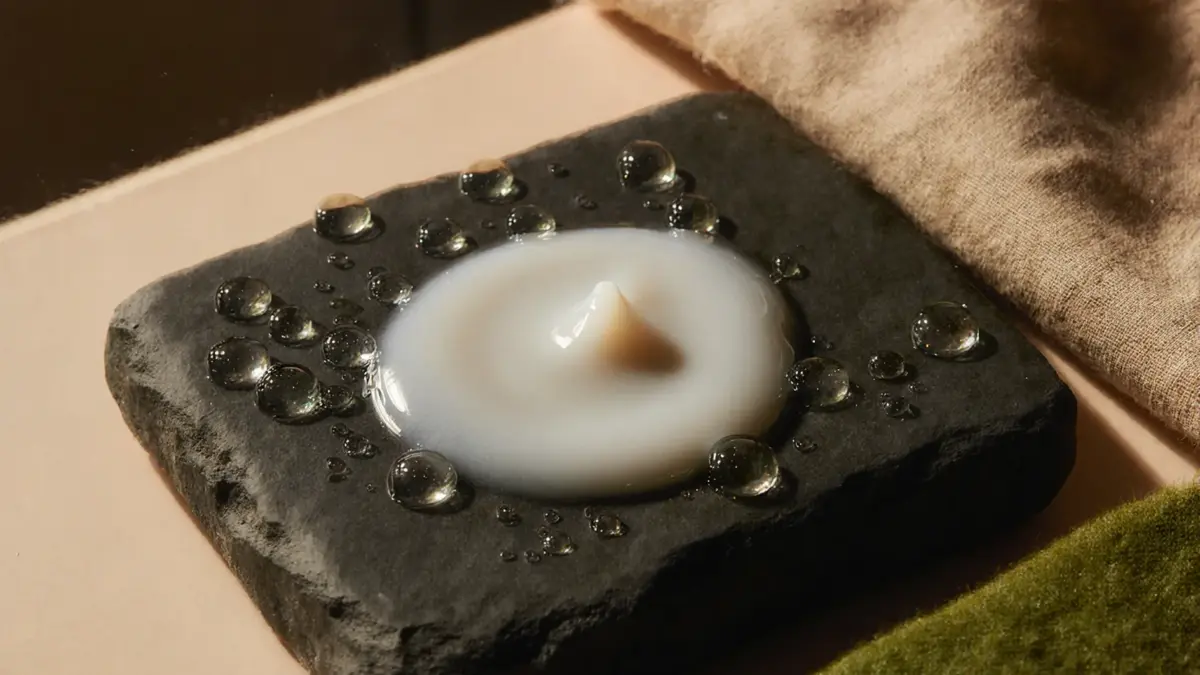
Yes, generally, but it depends which “milk cleanser” you mean. A milk-only cleanser on its own is usually too gentle to clear a full day of makeup, SPF and city grime from oily or combination skin. An oil-to-milk cleanser is a different case. It goes on as an oil, turns milky with water, and works well on oily skin precisely because it’s oil-based.
Does cleansing milk work for oily skin if it’s oil-based?
The worry makes sense. Your skin already makes plenty of oil, so why add more? But the chemistry isn’t against you here. Oil dissolves oil, on any skin type, so an oil-based first cleanse is an efficient way to lift the very thing oily skin has too much of.
The bigger problem for oily skin is usually over-stripping, whatever the format. Strong surfactants can take off more oil than the barrier is comfortable losing, and skin often answers by making more. You know the pattern: squeaky-clean straight after washing, then shinier than expected a few hours later.
A gentler cleanser that still cleans thoroughly, without that stripped feeling, can ease the cycle. That’s the case for oil-to-milk on oily skin, rather than some vague idea that oil “balances” oil. We go into the mechanics in oil cleanser, milk cleanser, or both?
A milk-only formula is built for a soft, low-foam finish. That same softness makes it a weak single step on a day with real makeup or shine to shift. Gentleness is the point of the design, and on a normal day oily skin needs more cleansing power than that for the first pass.
Where the hybrid changes things
An oil-to-milk formula gets round that trade-off. The oil phase dissolves the makeup and sebum, and the milky rinse leaves no greasy film, which is usually what puts oily-skin people off “oil” in the first place. Our own Oil-to-Milk Cleanser works this way: it lifts makeup and sebum thoroughly, then rinses off milky and clean.
For combination skin that matters even more. One formula that cleans an oily T-zone without drying out your cheeks means you’re not buying two products for two parts of your face.
A cleanser’s job is to remove what’s sitting on your skin without stripping it. Doing that well is one factor in keeping buildup from collecting in pores. It can’t treat active breakouts or a diagnosed clogged-pore condition; for those, see a pharmacist rather than trying a different bottle.
Read “non-comedogenic” carefully, too. It means an ingredient is unlikely to clog pores under test conditions, and it’s neither regulated nor a universal guarantee. Our explainer on what non-comedogenic means sets out what the term does and doesn’t promise.
Getting the technique right
Apply it to dry skin, so the oil can grip makeup and sebum before any water arrives. Massage for a full 30 to 60 seconds. Then add water a little at a time and keep massaging as it turns milky, because that stage does the cleaning. Rinse thoroughly; under-rinsing is what makes any cleanser feel like it left a film.
A few habits work against you. Wetting your face first starts the milky stage too early. One rushed attempt can make the format seem wrong for oily skin when the technique was the problem. And washing more than twice a day, or scrubbing harder to fight shine, tends to set off the stripping-and-rebound cycle. Before switching products, try our step-by-step guide to emulsifying a cleansing oil.
Oily skin isn’t equally oily every day. A light-makeup day, or a day at home without SPF, is a fine moment for something gentler. Our Micellar Cleansing Water suits normal, dry and oily skin for those lighter days, though not in place of a proper cleanse after full makeup. Our guides to micellar water and whether to rinse it off and how all three formats compare cover the rest.
A second cleanse is for heavy makeup or several layers of SPF, not a blanket rule for oily skin. Here’s when double cleansing earns its place.