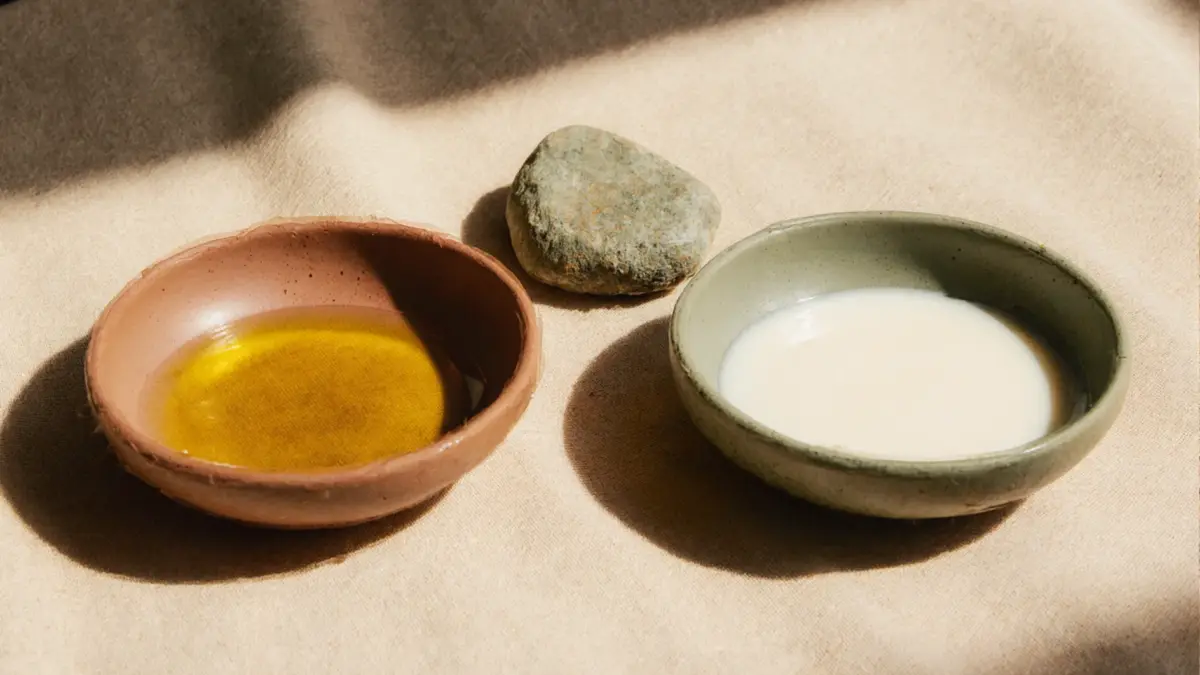
If you’ve spent any time in skincare aisles or comment sections, you’ve probably seen people argue oil cleanser versus milk cleanser — or cleansing oil versus cleansing milk, same debate, different wording — like you have to pick a side. You don’t. The format that’s quietly taken over a lot of shelves in the last couple of years, oil-to-milk, exists specifically because both camps were half right, and the hybrid does the job better than either one alone.
Oil Cleanser vs. Milk Cleanser: The Actual Difference
How a cleansing oil works
Oil cleansers — sometimes sold as “cleansing oil” — rely on a simple chemistry fact: oil dissolves oil. Makeup, sunscreen, and the natural sebum on your skin are all oil-based, so a cleansing oil breaks them down and lifts them off far more effectively than a foaming, water-based wash ever could on its own. That’s the whole appeal — genuinely effective makeup removal, without the harsh, stripped feeling that heavy-duty foaming cleansers can leave behind.
The catch: most oil cleansers rinse off feeling, well, oily. Some people love the silky finish. A lot of people don’t want to towel their face off like a dinner plate before bed.
How a milk cleanser works
Milk cleansers, or “cleansing milk,” sit on the opposite end. They’re lightweight, low-foam, and formulated to feel soft and comfortable on skin — a good fit for sensitive or reactive skin that doesn’t tolerate stripping surfactants well. The tradeoff is the reverse of a cleansing oil’s: milky formulas generally aren’t strong enough on their own to fully break down a full face of makeup or SPF, which is why they’re usually recommended as a second cleanse, not a first one.
So What Is an “Oil-to-Milk” Cleanser?
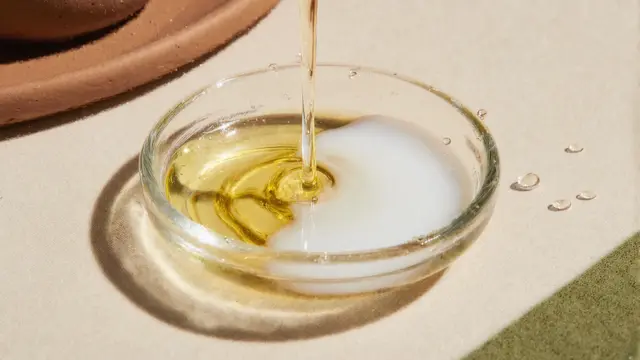
An oil-to-milk cleanser is built to change texture as you use it. It goes on as an oil — so it does the actual work of dissolving makeup and sebum the way a true cleansing oil does — and then, when you add water and massage, it emulsifies into a milky texture that rinses away cleanly instead of leaving that residual oily film behind.
The mechanism behind that shift is genuinely simple: the formula includes sugar-derived emulsifiers (in our own Oil-to-Milk Cleanser, those are sucrose laurate and sucrose palmitate) alongside the oil base. Emulsifiers are molecules that bond to both oil and water at once. As long as the formula stays dry, it behaves like an oil. The moment water touches it, those emulsifiers grab onto both the oil and the water and pull them into a stable, milky mixture — which is why the texture change happens right in your hands, mid-cleanse, rather than being two separate products.
In practical terms: you get the makeup-dissolving power of a cleansing oil and the comfortable, non-greasy rinse-off of a milky cleanser, from a single step. That’s the entire reason the format exists — it’s not a gimmick texture change, it’s solving the actual tradeoff between the two older formats.
At a Glance: Oil, Milk, or Oil-to-Milk
| Format | Best at | Rinse-off feel | Best used as |
|---|---|---|---|
| Cleansing oil | Dissolving makeup, SPF, sebum | Can leave a light film if not fully rinsed | A first cleanse, often followed by a second one |
| Cleansing milk | A gentle, comfortable finish | Light, low-foam, soft | A second cleanse, or a stand-alone wash on days with no makeup/SPF |
| Oil-to-milk | Both jobs, one product | Rinses clean and milky, no residue | A single-step cleanse, most evenings |
Why This Matters for Sensitive Skin
A lot of traditional foaming cleansers rely on stronger surfactants to cut through oil and makeup, and those same surfactants are frequently what strips the skin barrier and leaves reactive skin feeling tight, dry, or irritated afterward. An oil-to-milk format sidesteps that problem structurally: the oil phase does the heavy lifting on makeup and impurities, so the formula doesn’t need to lean on harsh detergents to get skin clean. That’s a meaningful difference if your skin tends to react to “clean” feeling that’s actually stripped feeling.
Our own formula pairs the oil-to-milk base with camomile, sea buckthorn, and cloudberry extracts, and it’s suitable for sensitive skin and dermatologically tested. Worth knowing: it isn’t fragrance-free — the ingredient list includes parfum — and the scent itself is a soft fruity, white-flower one, a little jasmine, a little sandalwood, on a powdery, slightly green background. If you’re specifically avoiding fragrance because of reactive skin, that’s worth a patch test first, same as with any new product.
Is Oil-to-Milk Good for Oily Skin?
There’s a persistent idea that oily skin should avoid oil-based cleansers altogether — more oil on already-oily skin sounds like the wrong direction. In practice, the opposite is often true. “Like dissolves like” is the same chemistry whether your skin runs dry or oily: an oil cleanser lifts the sebum that’s already there rather than adding to it, and it rinses away with the water step, taking that oil with it.
There’s also a commonly discussed idea in skincare that a cleanser strong enough to strip skin completely can prompt it to produce more oil to compensate — how strong that effect really is varies person to person, but it’s a big part of why gentler, non-stripping formats get recommended for oily-prone skin too, not just dry or sensitive skin. An oil-to-milk format’s whole design goal is a thorough clean without the harsh detergents a stripping cleanser relies on, which is worth knowing if you’ve been avoiding oil-based cleansers on the assumption they’re only for dry skin.
That said, “oily skin” covers a wide range, and a milk-only cleanser used as a light second pass, or on its own on days with minimal makeup, is a completely reasonable choice too if a single oil-to-milk step ever feels heavier than your skin wants. Neither is wrong — it’s worth testing both and noticing which finish your own skin actually prefers.
When to Choose Which
- Wear makeup or SPF daily, and want one product, one step? Oil-to-milk is built for exactly that.
- Have very reactive skin and want the gentlest possible finish? Start with the oil-to-milk format used as a single, unhurried pass — the milk phase is where the comfortable finish lives, so don’t rush past it.
- Already double-cleansing with a separate oil and a separate foaming wash? An oil-to-milk cleanser can typically replace both — it does the oil cleanse’s job, and its own rinse-off already does most of what a second, gentle wash is for.
- Wear little to no makeup or SPF most days? A milk-only cleanser, or a single light pass with an oil-to-milk formula, is usually enough — there’s no need to “double up” on days with nothing heavy to remove.
How to Use an Oil-to-Milk Cleanser
1. Apply to dry or damp skin — dry skin lets the oil phase grab onto makeup and SPF most effectively. 2. Massage gently for 30–60 seconds. This is the step people rush. Give the oil time to actually dissolve what’s on your skin before you introduce water. 3. Add water and keep massaging. This is where you’ll feel the texture shift from oil to milk — it’s a genuinely satisfying moment to notice, and also your visual cue that it’s ready to rinse. 4. Rinse thoroughly. No residue, no towel-off oil slick. 5. Avoid direct contact with eyes, and if you’re removing eye makeup specifically, take it slow around that area.
Common Mistakes
- Wetting your face before you start. Water on your skin or hands begins the emulsification early, before the oil phase has had a chance to grip makeup and SPF properly.
- Adding water in one big splash. A little at a time, massaged in, gives a cleaner texture shift than dunking your whole face and hoping.
- Rushing the first massage. Thirty seconds feels long at 11pm. It’s also what the oil phase actually needs to do its job.
- Under-rinsing. A milky cleanser should rinse away completely — if your skin still feels filmy afterward, go back for a second rinse rather than towelling it off.
- Judging it on a single use. A first try on unwashed hands, a rushed massage, or too little product all read as “it didn’t emulsify properly” when the technique, not the formula, was the variable.
Who It’s For
If you wear makeup or SPF daily and have been putting up with a stripped, tight feeling from your current cleanser to get it all off, this format is built for exactly that problem. It’s also a reasonable single-step cleanse for anyone who doesn’t want to commit to a two-cleanser routine every night but still wants a proper, thorough clean before the rest of their ritual. Not sure whether that second pass is worth it most nights? Here’s how to tell. And if a wipe-off micellar water fits your mornings better, here’s how that format compares.
Cleansing is step one for a reason — it’s what everything after it, including the barrier serum that follows it, actually gets to work on. Get this step right and the rest of the routine has a clean, calm base to build on.
Which Should You Actually Choose? By Skin Type
The comparison changes shape a little depending on what your skin actually does day to day. Here’s the short version for each:
- Dry or easily-irritated skin: oil-to-milk is usually the better fit — it cleans thoroughly without the stripping a foaming, water-based wash can cause. A milk-only cleanser is a fine, gentle option on a bare-face day.
- Oily or combination skin: oil-to-milk is still usually the right call, for the “like dissolves like” reason above, not despite it. We’ve covered the oily-skin case in full separately, including the stripping-rebound cycle a gentler format can help avoid.
- Blackhead- or pore-prone skin: cleansing format isn’t a treatment for either — no cleanser, oil or milk, can remove a blackhead that has already formed. What a thorough oil-based cleanse can do is reduce how much sits on the surface each day. We’ve written the honest version of what cleansing can and can’t do here.
- Minimal makeup, or short on time: a milk-only cleanser, or a wipe-on micellar water, is usually enough on its own. Here’s how all three formats compare side by side if you’re weighing up more than just oil versus milk.
Quick Answers
Is a milk cleanser better than an oil cleanser?
Neither is better in the abstract — they’re suited to different jobs. A milk cleanser gives the gentler, more comfortable finish; an oil cleanser gives the more thorough makeup-and-SPF removal. That tradeoff is exactly what the oil-to-milk format was built to close, rather than forcing a choice between the two.
Can I use a milk cleanser instead of an oil cleanser?
You can, if you don’t wear much makeup or SPF — a milk cleanser alone is a fine, gentle daily wash for a bare or lightly-made-up face. If you’re removing a full face of makeup or sunscreen, though, a milk-only formula usually isn’t strong enough to do that on its own, which is exactly the gap an oil or oil-to-milk step exists to fill.
Which is gentler on skin, oil cleanser or milk cleanser?
A milk cleanser generally feels gentler in the moment — lighter, low-foam, no oily residue to rinse away. An oil cleanser can feel heavier mid-use but isn’t inherently harsher on skin; the oil-to-milk format is built to combine the oil cleanser’s thoroughness with something closer to the milk cleanser’s comfortable finish.
Is oil cleanser or milk cleanser better for acne-prone skin?
Neither is a treatment for acne or blackheads — that’s a dermatological question, not a cleansing-format one. What a thorough oil-based cleanse can honestly do is reduce how much oil-based buildup sits on skin’s surface each day, which is a real but limited effect.
Can I use an oil cleanser and a milk cleanser together?
Yes — that’s essentially double cleansing: an oil-based first pass to dissolve makeup and SPF, followed by a milk or foaming second pass for a lighter, more thorough-feeling finish. An oil-to-milk formula already does most of that in one step, which is why a second pass is only sometimes worth adding on top of it.
Is oil-to-milk the same thing as double cleansing?
No, though they solve a similar problem. Oil-to-milk is one product that changes texture as you use it, in a single step. Double cleansing is two separate products or passes, one after the other. Oil-to-milk was built partly to close that gap for people who don’t want a two-product routine every night.
If oil-to-milk sounds like the cleanser your evenings have been missing, it’s the first step in our own three-product ritual — worth a look before you rebuild your routine around anything else. Ready to try it for yourself? Start with the Oil-to-Milk Cleanser — it’s the first step of our ritual, and the one we’d suggest trying on its own before anything else.