Eye creams get sold on some of the boldest claims in skincare and delivered in some of the smallest jars, and the gap between those two things is where most of the scepticism comes from. Here’s the honest, unglamorous version: the skin around your eyes is thinner than the rest of your face, moves constantly, and has fewer of the oil glands that help other areas stay comfortable on their own. That’s a real, physical difference — it’s the actual reason a separate, gentler formula for that specific area exists, rather than any of the more dramatic language eye creams are typically sold on.
What a targeted eye step is honestly for
A dedicated eye cream is an optional, targeted step — not a mandatory one, and not the small-jar equivalent of your face moisturiser. It’s formulated to suit skin that’s thinner and more easily irritated, applied in a smaller amount to a smaller area, and it’s reasonable to think of it as a precision tool rather than a universal requirement. If your regular moisturiser already reaches comfortably up to your eye area without irritating it, you may not need a separate product at all — this is very much an optional addition to a routine, not a missing essential.
What’s in ours
Our Calming Eye Cream is built with hemp seed oil, 1% cannabidiol (CBD), and hyaluronic acid, along with grape leaf, horse chestnut and ginkgo leaf extract. It’s designed as a cosmetic step to refresh the look of the eye area and help ease the look of dryness — that’s a claim about appearance, not a medical or therapeutic one, and we want to be precise about that distinction, particularly given the ingredient list. CBD here is included and described purely as a cosmetic ingredient in a skincare formula, the same as any other plant extract in the bottle; it isn’t positioned as treating anything, and we wouldn’t want anyone buying it expecting that.
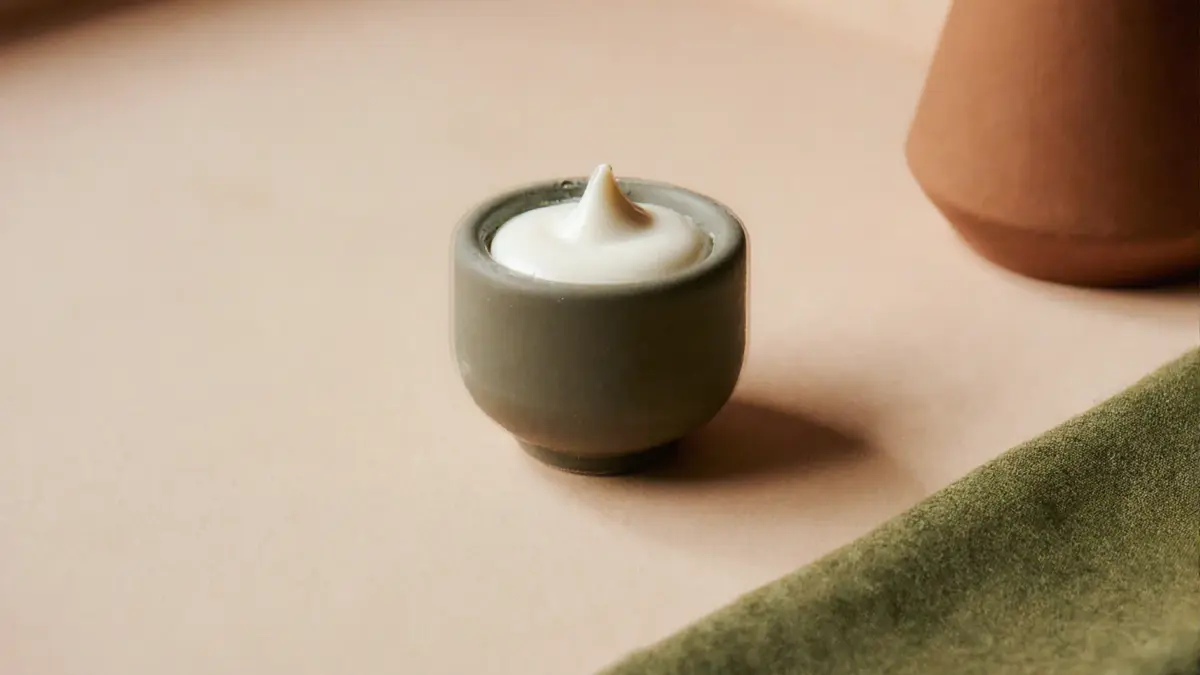
The texture is light, cool on contact, and absorbs quickly, with an earthy, spicy, softly floral scent — it does contain fragrance, so that’s worth knowing if scent is a concern around such a delicate area. It’s certified natural, vegan, and made in the EU, and it’s designed for dry, tired-looking skin around the eyes specifically.
How to use it
Apply a small amount around the eye area, morning or evening, and press it in rather than rubbing — the skin there is thin enough that dragging or tugging does more harm than the product could ever undo. It’s an optional, targeted step in the sequence, not a required one: if you’re using it, it typically goes on after your usual cleansing and hydrating steps, applied last and specifically to that smaller area. The full sequence it sits within, and where each step’s job starts and stops, is laid out on the ritual page.
Worth a patch test first
Because it’s applied so close to the eyes and does carry fragrance, it’s worth patch testing before your first full application rather than assuming any product you already tolerate elsewhere on your face will behave identically here — the eye area is thinner and more reactive than the rest of your face by nature, which is the whole reason a separate formula exists. We’ve written up the proper method in how to patch test a new skincare product.
Common mistakes
- Rubbing it in. The pressing motion isn’t a stylistic suggestion — dragging product across skin this thin is a common, avoidable source of irritation.
- Using too much. A small amount for a small area; more product doesn’t cover more ground, it just sits unabsorbed close to the eyes.
- Applying it right at the lash line. Keep it to the orbital bone area rather than the lash line itself, to avoid product migrating into the eyes as your face moves through the day or night.
- Expecting an overnight change. Like the rest of the range, this is a product for consistent, patient use — not a same-day fix for how tired the eye area looks after one bad night’s sleep.
What it isn’t
It isn’t a treatment for a medical or dermatological condition around the eyes, and we’re not going to describe it as one — if something around your eyes is genuinely painful, swollen, or persistent, that’s a conversation for a pharmacist or doctor, not a cosmetic product. It’s also not a step that will transform overnight; like the rest of the range, it’s designed to support how skin looks and feels with regular, patient use, not a fast fix. And it’s one optional step among several — if you’d rather build a simpler routine with fewer, more deliberate products than a shelf of small-jar add-ons, that’s exactly the thinking behind skinimalism 101: a skincare routine you’ll actually stick to.
Who it’s designed for
It’s built specifically for dry, tired-looking skin around the eyes — a narrower brief than “anti-ageing eye cream” language usually implies, and a more honest one. If the skin around your eyes isn’t particularly dry or tired-looking, and nothing about that area bothers you day to day, that’s a reasonable sign you don’t need this specific step, whatever a shelf of small jars might suggest otherwise.
What we’d recommend
If the skin around your eyes tends to look dry or tired regardless of how well the rest of your routine is going, the Calming Eye Cream is built specifically for that smaller, thinner-skinned area — a light, quick-absorbing formula with hemp seed oil, CBD and hyaluronic acid, designed to refresh the look of the eye area rather than promise something bigger than a cosmetic product honestly can. If you’re putting a whole evening routine together rather than adding a single step, it’s also one of the three products in the Night Ritual Set, alongside the Micellar Cleansing Water and the Sensitive Skin Overnight Cream — €59.90 for the three, which is €9.80 less than buying them individually.