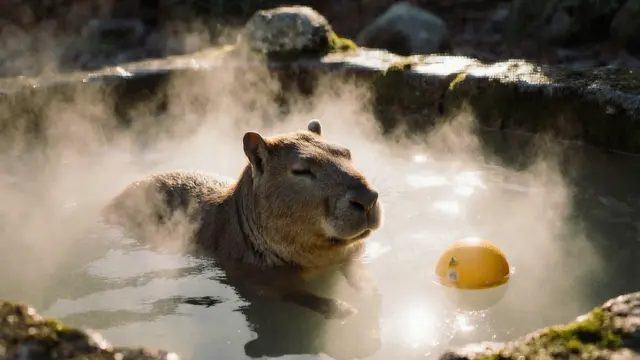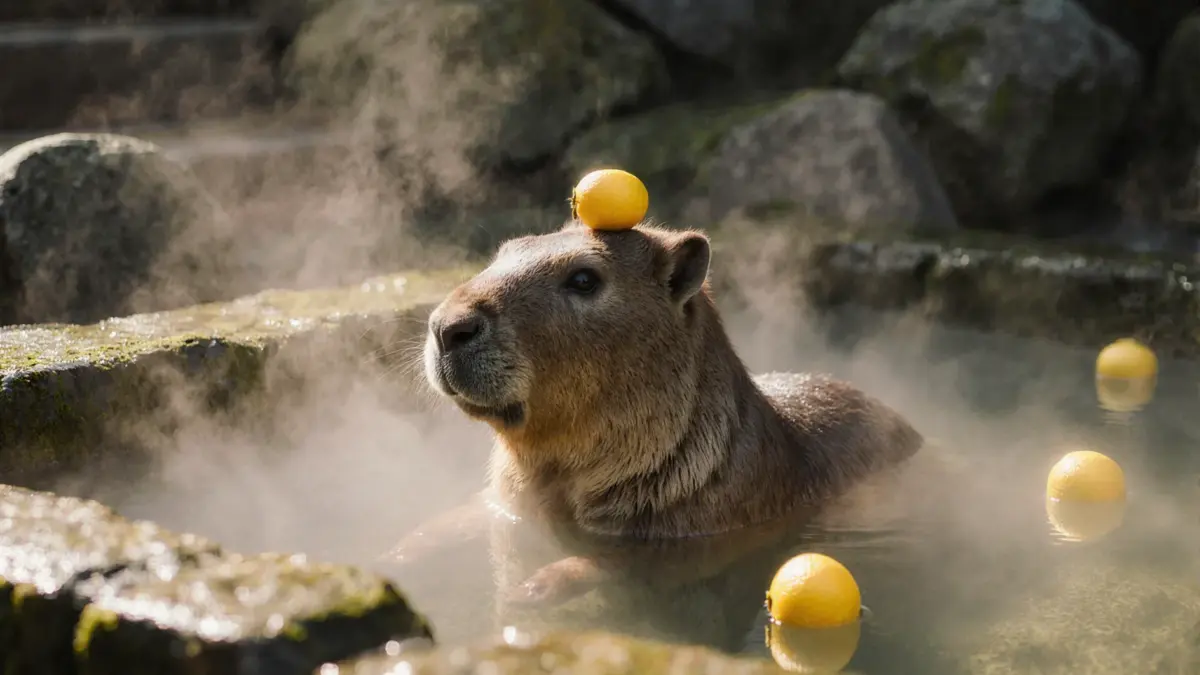
Capybara, steaming water, a piece of citrus balanced on its head. It’s one of the internet’s most recognisable capybara images, and the citrus is specific enough that people search for it directly. The short answer: it’s a real Japanese winter custom, not a prop.
A seasonal practice, not a prop
It traces back to Japanese hot spring parks (onsen), where capybaras have been part of winter displays for decades. During citrus season, staff began floating fruit in the water with them: most famously yuzu, though other citrus turns up too.
It wasn’t invented for a photo. Floating citrus in a hot bath is already a familiar seasonal tradition for people in Japan, so the practice is local rather than staged for cameras.
Do the capybaras like it?
A bit of both, and we’d rather say that plainly than overclaim either way. Floating fruit in an enclosure is ordinary zoo enrichment: a scented, textured object to investigate, not a special diet. Capybaras are famously unbothered by almost everything, so they react with mild interest at most. Occasionally a curious nibble. Mostly they keep sitting exactly where they were.
That non-reaction is why the image works. What’s well established: it’s a real seasonal practice, it works as enrichment, and the capybaras’ easy-going nature is a big part of why the photos look calm rather than chaotic.
Once the image started circulating, the citrus became as recognisable as the capybara. It’s the detail that turns “animal in water” into a specific picture people share and name.
What we took from it
We’re a skincare brand named after this exact image, so to be upfront: our products contain no hot-spring water, and there’s no citrus extract in our formulas because of this story. Any citrus-adjacent ingredient in our range is there because it does a documented job in the formula, not as a nod to yuzu.
What we borrowed is the feeling in the photo: something resting completely, without needing anyone to notice. We wrote our whole ritual against that standard. Our story tells how it became a brand, and why is everyone obsessed with capybaras takes the wider question. The hot spring has its own traceable origin too: here’s how the zoo tradition started.