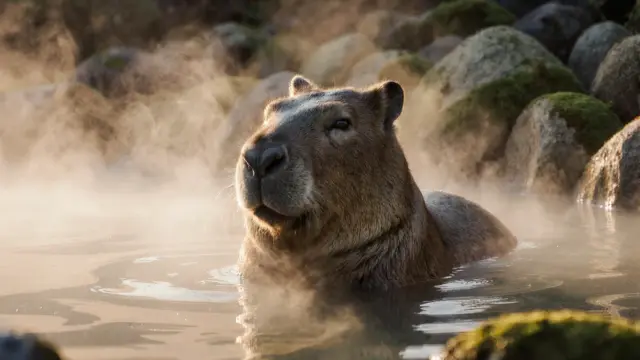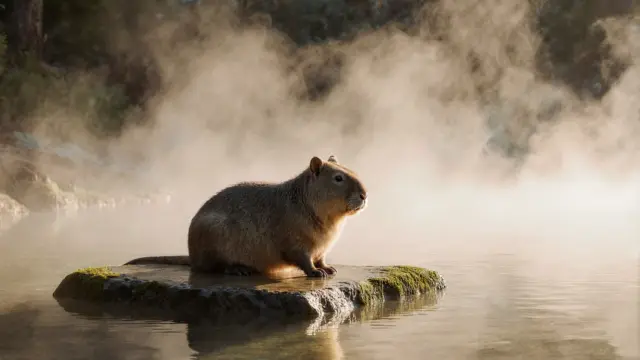
Every winter, several zoos across Japan let their capybaras into steaming outdoor hot spring baths, and the footage is some of the most recognisable capybara imagery online. It looks invented for a camera. It wasn’t.
It started by accident, at one zoo, for a practical reason that had nothing to do with cuteness. It has been running as a seasonal tradition for over four decades.
Where capybara hot springs started
The story begins at Izu Shaboten Zoo, in the seaside town of Itō, southwest of Tokyo. The zoo had been breeding capybaras since 1966, when they were still a rarity in Japan.
According to the zoo’s own account, a keeper cleaning out the enclosure with hot water one day in 1982 noticed something unplanned. The capybaras had gathered in the warm puddles left behind, feet and hindquarters submerged, looking extremely pleased with themselves. A cleaning routine became a discovery. The zoo built on it on purpose, and eventually gave them a dedicated outdoor bath rather than leaving it to puddles.
It makes sense once you know the animal. Capybaras come from warm, humid parts of South America and spend much of their normal life in and around water. A heated bath in a Japanese winter is a lot closer to their idea of comfort than the cold outdoor air.
Their skin can get rough and dry in colder months, too, and regular soaking keeps it in better condition. Nobody trained them into any of this. The zoo gave them a version of the conditions they’re built for, during the part of the year when the climate works against them. The capybaras took it from there.
Why there’s citrus floating in the water
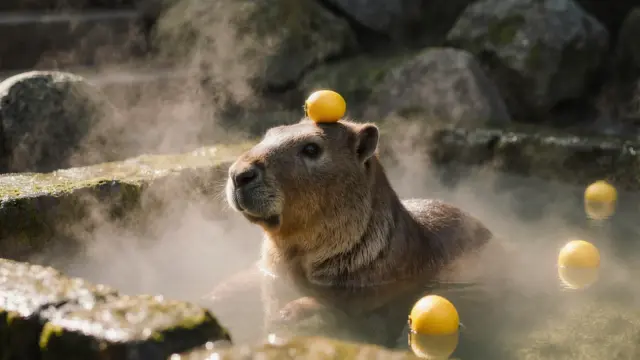
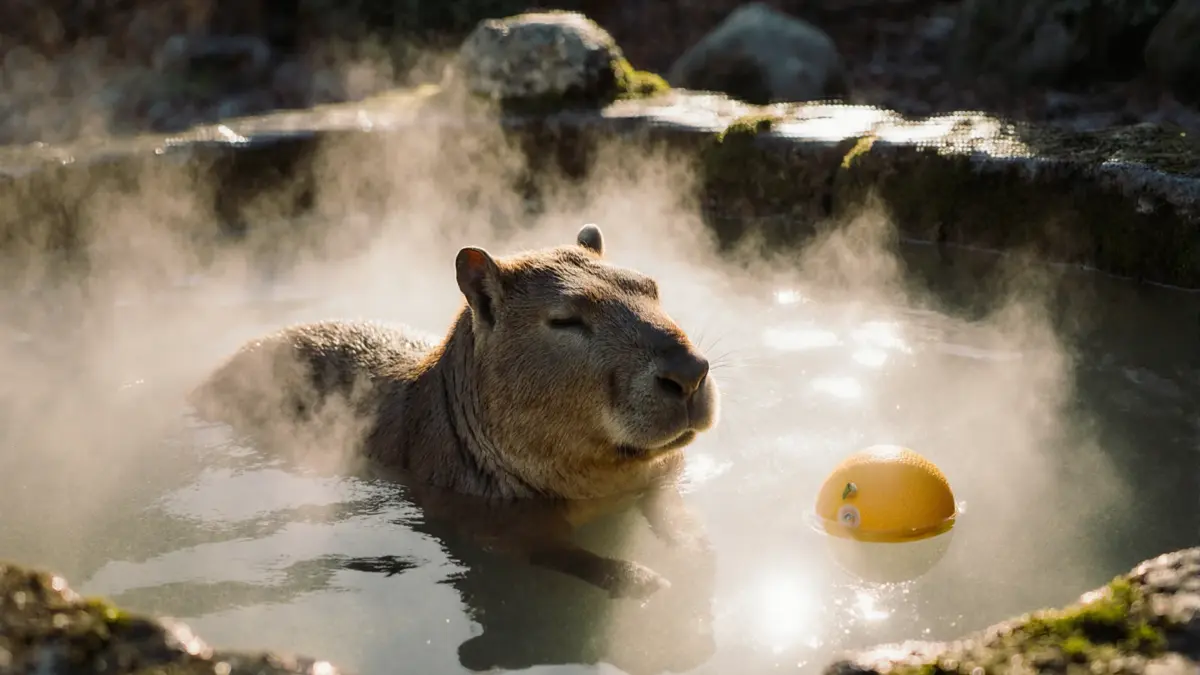
The capybara-with-a-fruit-nearby picture comes from the yuzu bath, a much older Japanese tradition. Floating yuzu, a fragrant citrus, in a hot bath around the winter solstice goes back to the Edo period, centuries before any capybara got involved.
One theory for the custom is a pun. “Winter solstice” (tōji) sounds the same as a phrase meaning roughly “hot-spring treatment”, so it’s wordplay, not a claim about the fruit. Izu Shaboten Zoo borrowed the human tradition for its capybaras, which is why the fruit turns up around the solstice rather than for the whole bathing season. Whether the capybaras care about the fruit is another matter, and we look at that in whether capybaras like the fruit, or it’s mostly staged for the photo.
How far it’s spread
What began at one zoo in 1982 is now a wider seasonal tradition. Several Japanese zoos and animal parks run their own capybara bath seasons through the colder months, each with its own character:
- Izu Shaboten Zoo (Shizuoka): the original, running roughly November through April, and known for occasionally adding fruit or flowers beyond the standard winter-solstice yuzu.
- Nagasaki Bio Park: home to a notably large capybara group, with its own season typically running December through February.
- Nasu Animal Kingdom: pairs its capybara baths with a human hot spring that overlooks the animals, and has hosted a long-soak competition among individual capybaras. The winner is, presumably, whoever cares least about getting out.
- Saitama Children’s Zoo: delivers warm water through a bamboo spout, closer in style to a traditional Japanese bathhouse, roughly November to the end of March.
Several of these zoos have reportedly formalised the practice together as a shared seasonal event. Not bad going for a spot of enclosure cleaning.
Is it for the animals, or just for visitors?
A lot of viral animal footage is staged for the camera. This mostly isn’t. The baths run in the cold months, when the climate doesn’t suit an animal built for a warm, wet habitat, and they stop once the weather warms up rather than running all year for foot traffic.
That seasonal, welfare-led logic, plus the fact that it grew from something the animals did on their own, is why it holds up. It’s a rare internet-famous animal moment with a real story behind it.
Add the yuzu photos, “capybara energy” as internet shorthand, and the animal’s talent for looking unbothered by absolutely anything, and the hot spring image has become the most recognisable capybara picture online. It’s no small part of why we picked the capybara as ours. If you want the wider story, we’ve covered why capybaras became the internet’s unbothered mascot and what “capybara energy” describes.
Quick questions
- Which zoo started capybara hot spring baths? Izu Shaboten Zoo in Itō, Shizuoka Prefecture. By the zoo’s own account, it began by accident in 1982, when a keeper cleaning the enclosure with hot water noticed the animals gathering in the warm puddles left behind.
- Can I visit a capybara onsen in Japan? Yes. Izu Shaboten Zoo, Nagasaki Bio Park, Nasu Animal Kingdom and Saitama Children’s Zoo all run public capybara bath seasons through the colder months, generally somewhere in the November-to-March window. Check each zoo’s own site for that year’s dates, since schedules shift with the animals’ condition and the weather.